
How do you sell tickets to a gala or ball with tables, standing tickets and boxes?
Price each seat including admission, sell standing tickets next to it and keep boxes and sponsor tables invitation-only, all in one event and one shop.
Put every ticket type for the night in one shop. Price each seat so it already includes admission, sell standing (general admission) tickets alongside, and keep boxes and sponsor tables behind an invitation. Guests buy once, know what they get, and your committee stops answering the same question on the phone.
The ticket types at a ball or gala
| Ticket | What the guest gets | How it's usually sold |
|---|---|---|
| Standing / general admission | Entry to all rooms, no reserved seat. In German-speaking balls this is the "Flanierkarte". | Open sale, often in large numbers |
| Seat at a table | A reserved seat at a numbered table, priced by area (ballroom, gallery, side room) | Open sale, with a seating chart |
| Whole table | A table for 8 to 10, often bought by a company or a group of friends | Open sale or sponsor packages |
| Box (loge) | A separate area for one group, often overlooking the dance floor | Invitation only: sponsors, honorary guests, regulars |
Reduced tickets for students are their own ticket type with their own price. Your door team checks the student ID.
Price seats including admission
Many balls sell admission and the seat separately: first an entry ticket, then a table ticket on top. Every year it raises the same questions. "Do I still need an entry ticket if I have a table ticket?" "Why won't my table ticket get me in?"
One price per seat category, admission included, is simpler:
- Standing ticket: 75 €
- Gallery seat: 75 € admission + 30 € seat = 105 €
- Ballroom seat: 75 € admission + 55 € seat = 130 €
Three prices, one purchase. At the door, every ticket counts as admission.
Boxes and sponsor tables
Boxes and sponsor tables rarely go on open sale. Hand them out before the public sale starts, in one of three ways:
Reserve them first
Decide which boxes and tables go to whom before public sale opens. Release what's left later.
Sell with an invitation code
The box is its own ticket type that only appears with a code. Each code has a usage limit so a box is booked once.
Comp them through a guest list
Honorary guests and sponsors with free tickets get an invitation from a guest list, with the number of plus-ones they may bring.
A planning timeline for the committee
| When | What |
|---|---|
| 12 months out | Venue and date. Check the venue's capacity per room; it covers seated and standing guests together. |
| 9 months out | Seating chart drafted, ticket types and prices decided, sponsor packages offered. |
| 6 to 4 months out | Boxes and sponsor tables by invitation. Then public sale for seats and standing tickets. |
| 6 weeks out | Final guest count and meal choices to the caterer. |
| Ball night | Scan tickets at the door, watch the entry count, keep a list of open questions for next year. |
| A week after | Written handover for next year's committee: prices, sales curve, what went wrong. |
How Eventbuddy handles it
In Eventbuddy, every ticket type for the night lives in one event.
- Seating chart with tables and categories: draw the room in the browser, sort seats into categories and link each category to a ticket type and price. Guests pick their own seats. Eventbuddy turns seat maps on for you on request. Guide: set up a seat map. Overview: seating plan.
- Standing tickets: a regular ticket type in the same event, or a standing area in the seat map.
- Whole tables without a seat map: a "Table for 10" ticket type that issues ten tickets per purchase (set up ticket types).
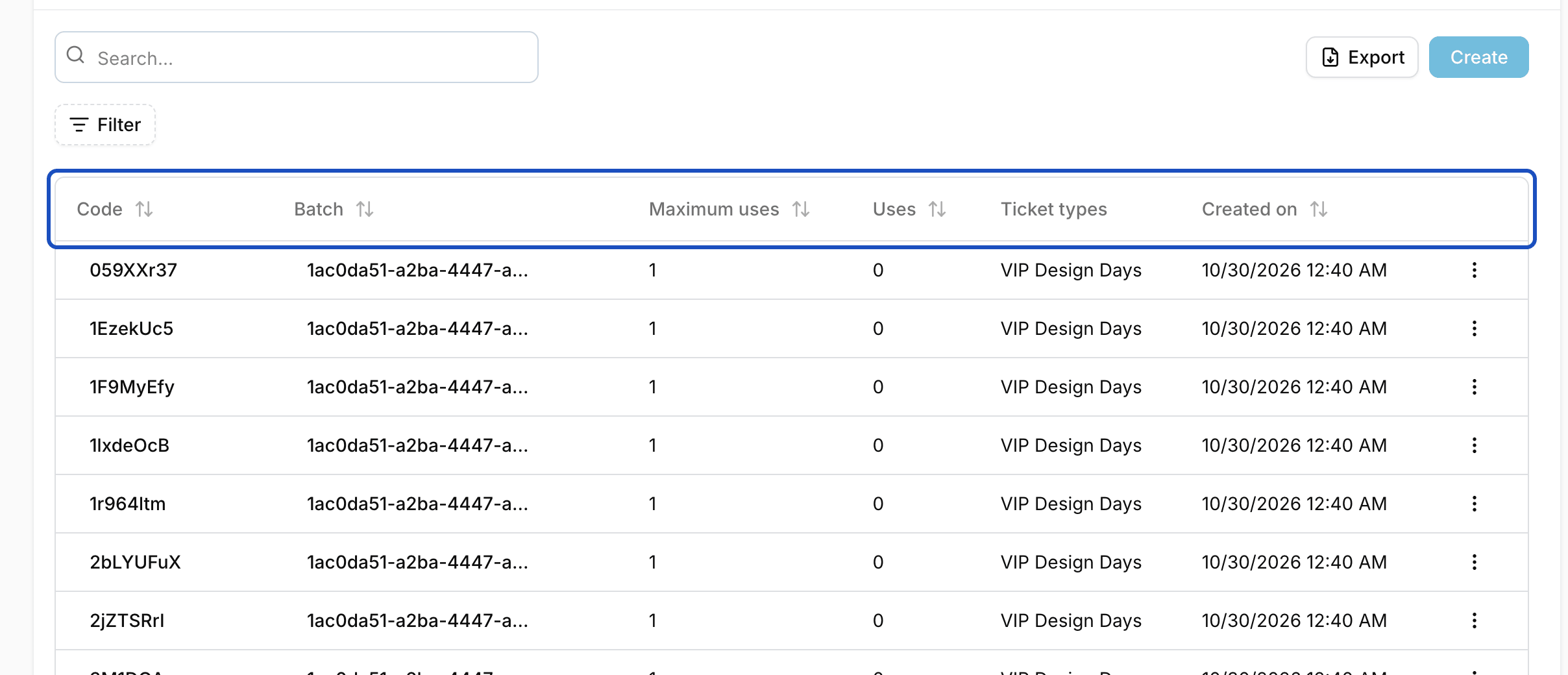
- Boxes: a ticket type that only shows up with an invitation code, each code with a maximum number of uses (member prices and access codes).
- Sponsors and honorary guests: guest lists with several tickets per entry, one by one or by CSV with up to 1,500 guests (create a guest list).
- Menu, allergies, dress code: your own checkout questions per ticket, and house rules guests accept at checkout (custom checkout questions).
- Next year: duplicate the event with all its ticket types, then change the title and date (create an event).
Eventbuddy works in euros and is built for organizers in Germany and Austria; the shop runs in German and English. More on balls: balls and galas.
FAQ
What is a standing ticket at a ball?
A standing ticket, called a Flanierkarte at German and Austrian balls, is admission without a reserved seat. Guests can move through every room and dance, but they don't have a table.
Should table seats include admission?
Yes, if you can. When every seat price already includes admission, guests buy once and nobody gets stuck at the door with a table ticket but no entry ticket.
Can Eventbuddy sell table seats and standing tickets in one shop?
Yes. In Eventbuddy, guests pick their seat on the seating chart, and standing tickets are a separate ticket type in the same event. Eventbuddy turns seat maps on for you on request.
How do I offer boxes to selected guests only?
In Eventbuddy a box is its own ticket type that only appears in the shop with an invitation code. You set how often each code can be used and send it to the guests you picked.
Ready by ball night
Seats, standing tickets and boxes belong in one shop. Our team sets up your ball with you, and together we fix a date before your sale starts by which everything is set up and tested. Get a test shop for your ball